
Sustainable Success: Embracing the Triple Bottom Line in Business
For decades, profitability stood as the main standard for measuring business success. Financial returns were everything. But in today’s world marked...
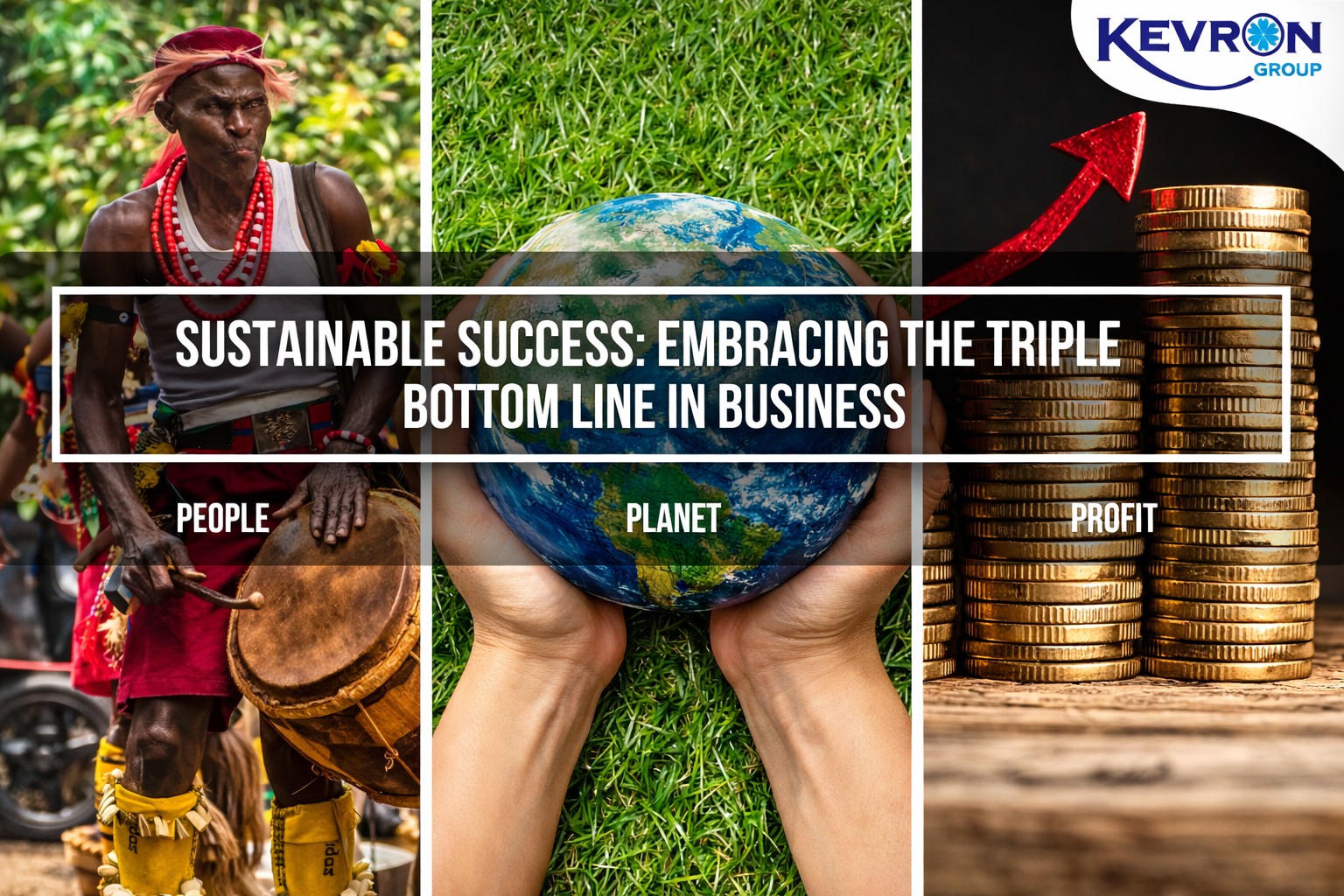
For decades, profitability stood as the main standard for measuring business success. Financial returns were everything. But in today’s world marked by climate urgency, social inequality, and shifting stakeholder expectations, a broader, more responsible view is important. Companies are now being challenged to ask deeper questions:
- · How do we treat our people?
- · What impact do we have on the planet?
- · Can we thrive financially while being responsible stewards of society and the environment?
These questions are fuelling a paradigm shift, one that’s being driven by a framework known as the Triple Bottom Line (TBL).
What Is the Triple Bottom Line?
Coined in 1994 by sustainability expert John Elkington, the Triple Bottom Line redefines business performance using three dimensions:
- People – Social sustainability
- Planet – Environmental responsibility
- Profit – Economic performance
Rather than focusing solely on financial results, it urges businesses to create value in ways that benefit society and the environment alongside shareholders.
This is closely aligned with the United Nations SDGs, a universal call to end poverty, protect the planet, and ensure peace and prosperity by 2030. TBL is a practical model that enables businesses to contribute to the SDGs through measurable impacts.
In essence: Success = People + Planet + Profit
The Three Pillars of TBL
- 1. People – Social Sustainability
This focuses on how businesses support their workforce and communities. Do they foster fair pay, inclusion, diversity, safety, and wellbeing? Are local communities engaged and uplifted? True growth cannot come at the cost of human dignity.
- 2. Planet – Environmental Responsibility
TBL pushes companies to reduce their environmental footprint, by lowering GHG emissions, conserving resources, minimizing waste, and embracing eco-friendly materials and cleaner technologies. It’s about progress, not perfection, through transparency and continual improvement.
- 3. Profit – Economic Value
Financial viability is essential, but it must be earned ethically and sustainably. Responsible businesses focus on long-term financial performance without exploiting people or the planet. Financial health and environmental-social responsibility can and should coexist.
Why the Triple Bottom Line Matters
Businesses that implement TBL principles tend to:
- Build stronger brand trust and consumer loyalty
- Align with ESG (Environmental, Social, and Governance) standards
- Attract purpose-driven employees and customers
- Foster innovation in sustainability
- Show resilience amid global disruptions
A New Era of Accountability
We are at a crossroads. The challenges we face; climate breakdown, economic inequality, social unrest, demand more than traditional business thinking. They require us to redefine success itself.
- · The Triple Bottom Line is not just a business strategy.
- · It is a call to leadership. A blueprint for resilience.
- · And a pathway toward building businesses that thrive by lifting others and protecting our shared future.
Reference:
Elkington, J. (1997). Cannibals with Forks: The Triple Bottom Line of 21st Century Business. Oxford: Capstone Publishing.
United Nations. (2015). Transforming our World: The 2030 Agenda for Sustainable Development. https://sdgs.un.org/goals
Statutory Guidance & Professional Applicability Note:
This publication provides high-level professional commentary and statutory analysis for UK health, safety, and environmental dutyholders. Regulatory requirements must be evaluated against site-specific conditions and operational hazard profiles. Consult a Kevron Chartered safety adviser for bespoke compliance auditing.
Speak to a CDM 2015 Adviser
Statutory CDM 2015 advisory, Construction Phase Plan preparation, RAMS review, and site compliance audits.
Related Professional Insights
Further guidance and toolkits in .
Global Ergonomics & Human Factors Engineering in Offshore Wind
A global technical webinar covering ergonomic design, human reliability assessment, and workforce fatigue mitigation in deepwater wind farm construction and maintenance.
Navigating the Building Safety Act 2022 & CDM 2015 in Fit-Out Projects
A practical, masterclass webinar examining key dutyholder obligations, competence requirements, and the digital golden thread under the UK Building Safety Act 2022 and CDM Regulations 2015.
CDM 2015 Principal Contractor Duties: Avoiding Common Compliance Pitfalls
A practical legal analysis of requirements under HSE L153, focusing on Construction Phase Plan (CPP) preparation and RAMS vetting protocols for UK commercial developments.